
Finding Muskegon Residents by Source
Muskegon does not maintain one master list of every household. Instead, choose a route based on the fact already in hand. An address works best with an assessment record, parcel map, or recorded instrument. A full name can be tested against a dated court entry, a recorded transfer, a library directory, or a voter-file request. An old address needs its original year and municipality before it can be compared with a modern map. That approach avoids turning an owner, a mailing contact, or a dated listing into a claim about present residence.
Start with a source that gives both a date and a second identifying detail. Then keep the source type in the notes. A tax record answers an ownership or mailing question. A city directory offers a historical snapshot. A docket records a court event. Each is useful, but none alone proves every part of a person’s history.
- Write down the name, address, city or township, approximate year, and any alternate spelling.
- Use the property route for a parcel, owner, and situs address, then check the mapped parcel.
- Search the deed index for recorded parties and dates, using grantor and grantee roles separately.
- For an older household, compare a directory edition with newspaper, census, or clerk material from the same period.
- Use a narrow request or an in-person library and archive route when the online search does not expose the needed record.
Note: Record the source date and the municipality because a Muskegon postal label can point outside the City of Muskegon.
Muskegon Residents Records Offices
The county and city keep related, but different, layers of the Muskegon residents directory. The Register of Deeds records property instruments. The County Clerk handles local vital, election, genealogy, and related services. The county’s assessment, tax, and GIS routes are address and parcel tools. City departments handle permits, inspections, and city records. The court clerk holds files beyond the public docket display. Knowing the custodian prevents a broad request from going to the wrong office.
Muskegon County Register of Deeds
173 E Apple Ave, Suite 301
Muskegon, MI 49442
231-724-6271
Recorded-instrument office and copy route
Muskegon County Property Routes
Assessment work is coordinated by the city or township assessor.
County tax and equalization records serve the broader county.
Use the municipal assessor for an individual assessment question.
Muskegon County Elections Division
1903 Marquette Ave, Suite A104
Muskegon, MI 49442
231-724-6221
The Muskegon County Register of Deeds office is the county’s primary route for recorded property instruments and office-copy information.
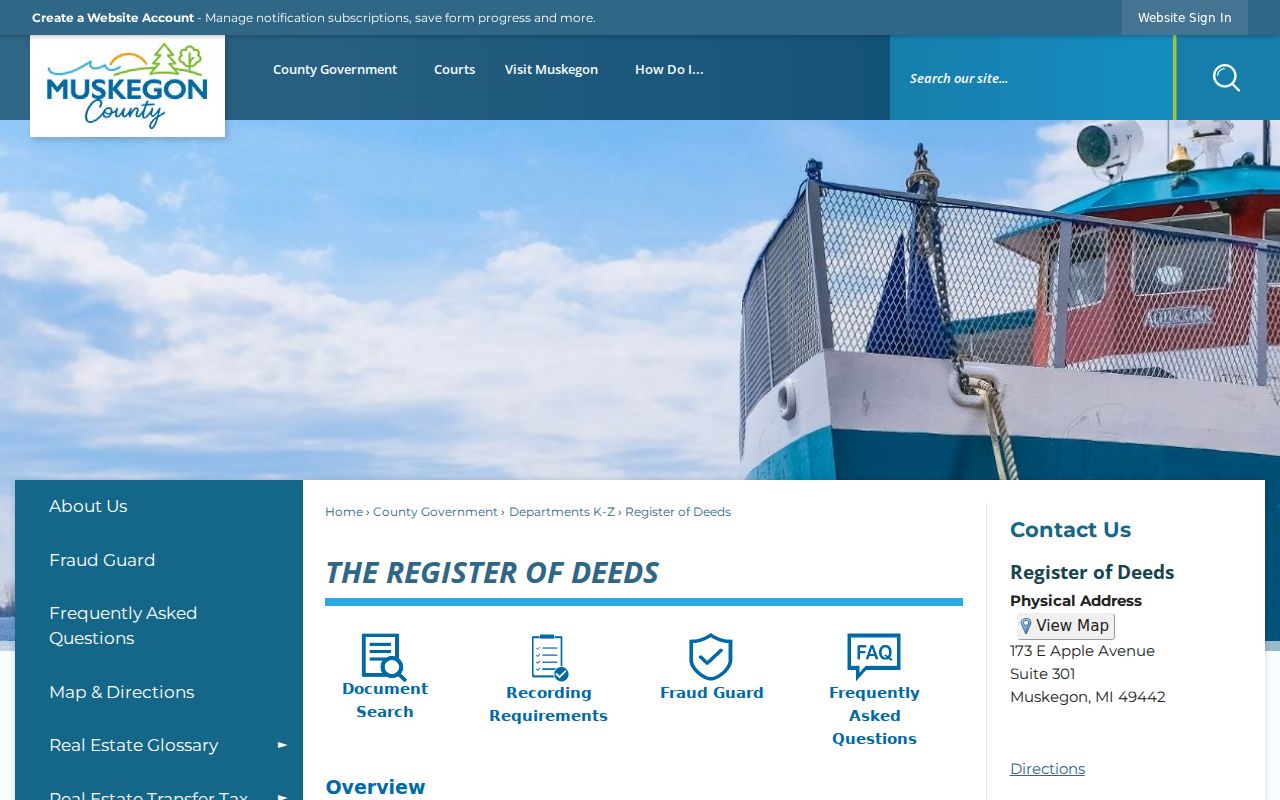
Use the office route when the online index identifies an instrument but the image, certification, or historical record requires a custodian copy or in-person search.
A records-office visit can also solve an access problem that a portal cannot. The Register provides in-person search and copies. The clerk has forms and genealogy procedures. The library and Archives of Michigan offer finding aids, microfilm, and staff routes when an online index stops short.
Muskegon Parcel Search Keys
The first strong address bridge is the City of Muskegon’s BS&A entry point. Its public landing page identifies Address, Name, and Parcel Number as search choices. Follow a result to the county GIS PropertyViewer to compare the site with parcel geometry, address-number layers, subdivision context, platted areas, easements, and rights of way. The parcel number is more stable than a street label when an address has changed, was renumbered, or is near a municipal boundary.
The BS&A property-search screen presents the three useful entry routes.
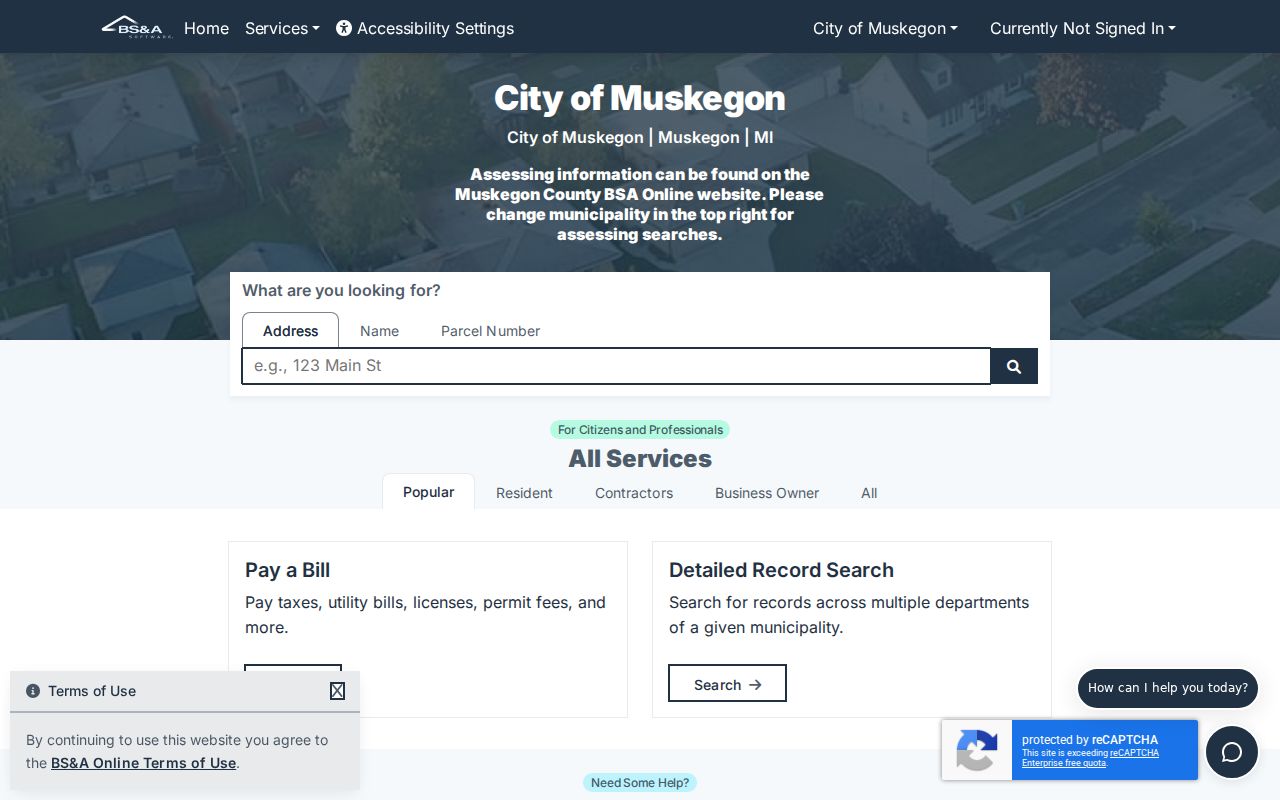
Use the same parcel number in a second record before drawing any conclusion about a household. A tax roll can keep a property address and an owner’s mailing address in separate columns, so the latter is not proof that the owner lives at the property.
| BS&A search field | Use in a Muskegon residents search |
|---|---|
| Address | Starts with a known current situs or street number. |
| Name | Finds an assessment or tax lead for a name already tied to Muskegon. |
| Parcel Number | Connects the assessment result to GIS, deeds, plats, and a legal description. |
Muskegon Deed Index Trails
Recorded instruments create a dated trail, not a roster of people living at an address. The county’s record-search page describes an index covering a portion of the database from 1859 to the present, updated daily, while image conversion remains in progress. The public index is free. Registered access is the route for image and printing access at the stated per-page charge, and the office provides copies and certification under its schedule.
Use the Muskegon recorder index by searching a current purchaser as grantee, locating the instrument, then searching the earlier party as grantee. Exact Match is order-sensitive, while Advanced matching and the wildcard tools can catch variations. Document number, date range, instrument type, and Find Related are useful once a first recorded item is found.
The county record-search page explains its historical scope and conversion caveat.
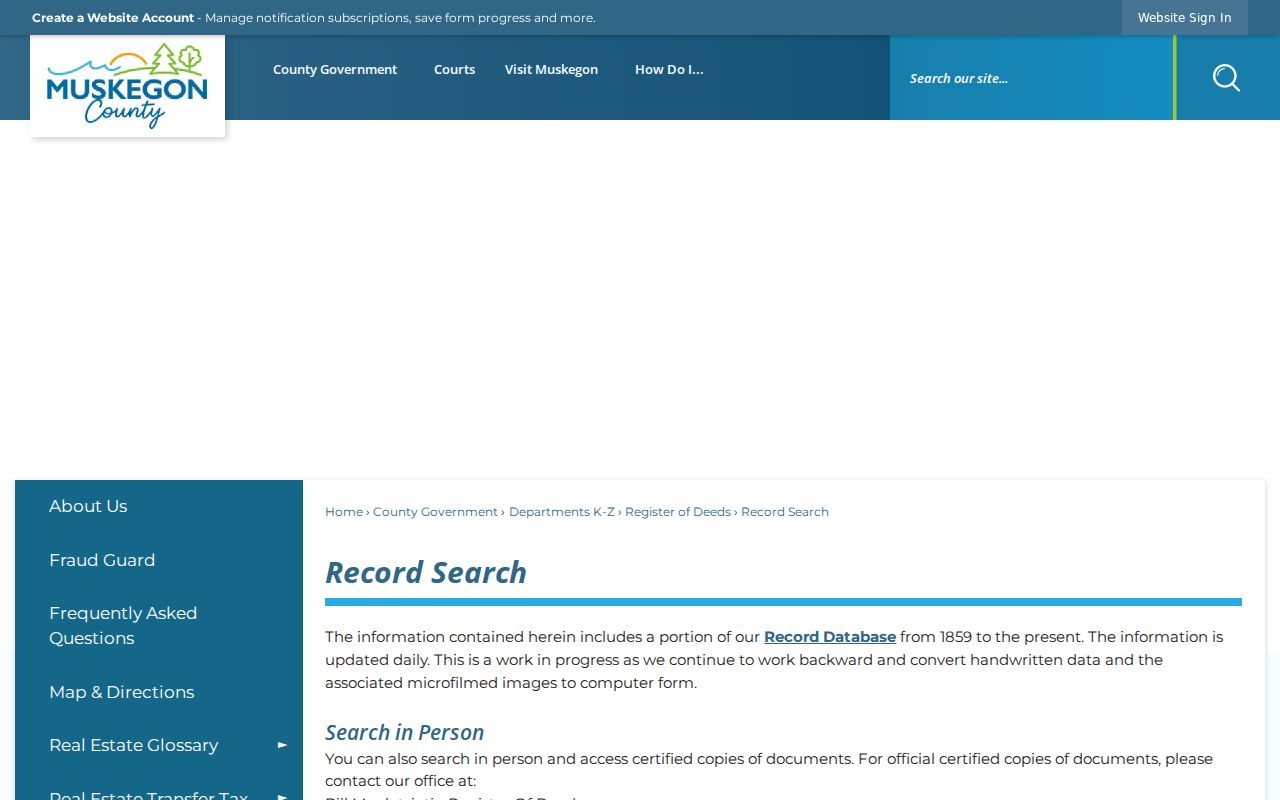
Follow a name hit with the legal description, parcel identifier, and a later or earlier instrument. A deed is evidence of a recorded transaction; a directory or newspaper is a better companion when the question is who was listed at the address during a particular year.
Current Muskegon Resident Directory Leads
Several public systems act like partial resident directories for Muskegon, but their coverage is different. Property records identify assessed ownership and mailing information. The election route is governed by voter-file rules. Deed results name recorded parties. Courts and license records preserve dated administrative events. Use the row that matches the question, then corroborate it rather than treating a single result as a complete profile.
| Muskegon source | What it can identify | Custodian | Access route |
|---|---|---|---|
| Assessment and tax record | Owner, situs, mailing address, and tax context | Municipal assessor, BS&A, county tax offices | Address, name, or parcel search |
| GIS parcel viewer | Parcel number, shape, lot, plat, and address geography | Muskegon County GIS | Public map and service layers |
| Recorder index | Grantor, grantee, instrument, and recording date | Register of Deeds | Free index, image and office-copy routes |
| QVF or voter route | Current voter-file fields permitted by law | Elections Division and Michigan Secretary of State | Individual portal or request form |
| Library and archive holdings | Dated directory, newspaper, census, obituary, and local-history clues | Hackley, MADL, MCGS, and Archives | Shelves, microfilm, form, catalog, or request |
When the task is to confirm one person instead of understand an address, the Muskegon resident lookup path keeps names, dates, and record limits in one workflow.
Muskegon Voter File Boundaries
Michigan’s Voter Information Center is for an individual’s registration and election information. The live public controls were not captured reliably in the research, so no unverified field list belongs here. A broader Muskegon County Qualified Voter File request uses the county form instead. It supports county, city or township, district, ward or precinct geography, election date and type, current-voter or election-participant selections, requested columns, and stated delivery options.
The Michigan Voter Information Center is the individual route shown below.
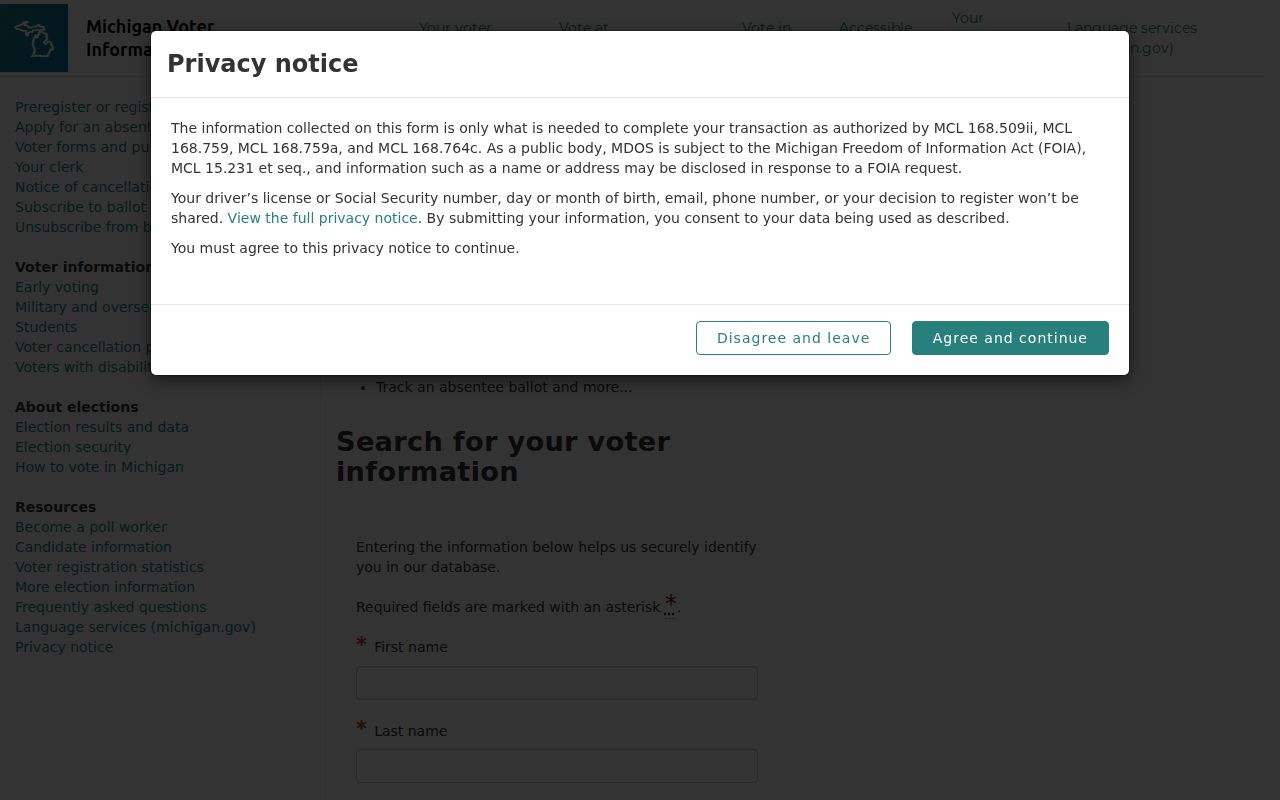
Michigan law protects driver-license and state-ID data, month and day of birth, phone numbers, signatures, and the last four digits of a Social Security number in voter data. A mailing address can differ from the residential address used for precinct assignment. A dated voter-file result can support a narrow question, but it should be paired with a directory, deed, newspaper, or tax record for historical residence.
Historical Muskegon Resident Directories
Hackley Library and Torrent House hold the backbone of the historical Muskegon residents directory. The first known local city directory was published in 1873 by A. Bailey. Later editions are mostly R.L. Polk, with newer volumes at the main Hackley building and older material at Torrent House. A directory can connect a person, address, and occupation in a particular edition, and later volumes may include address sections. Check the actual year before assuming which fields appear.
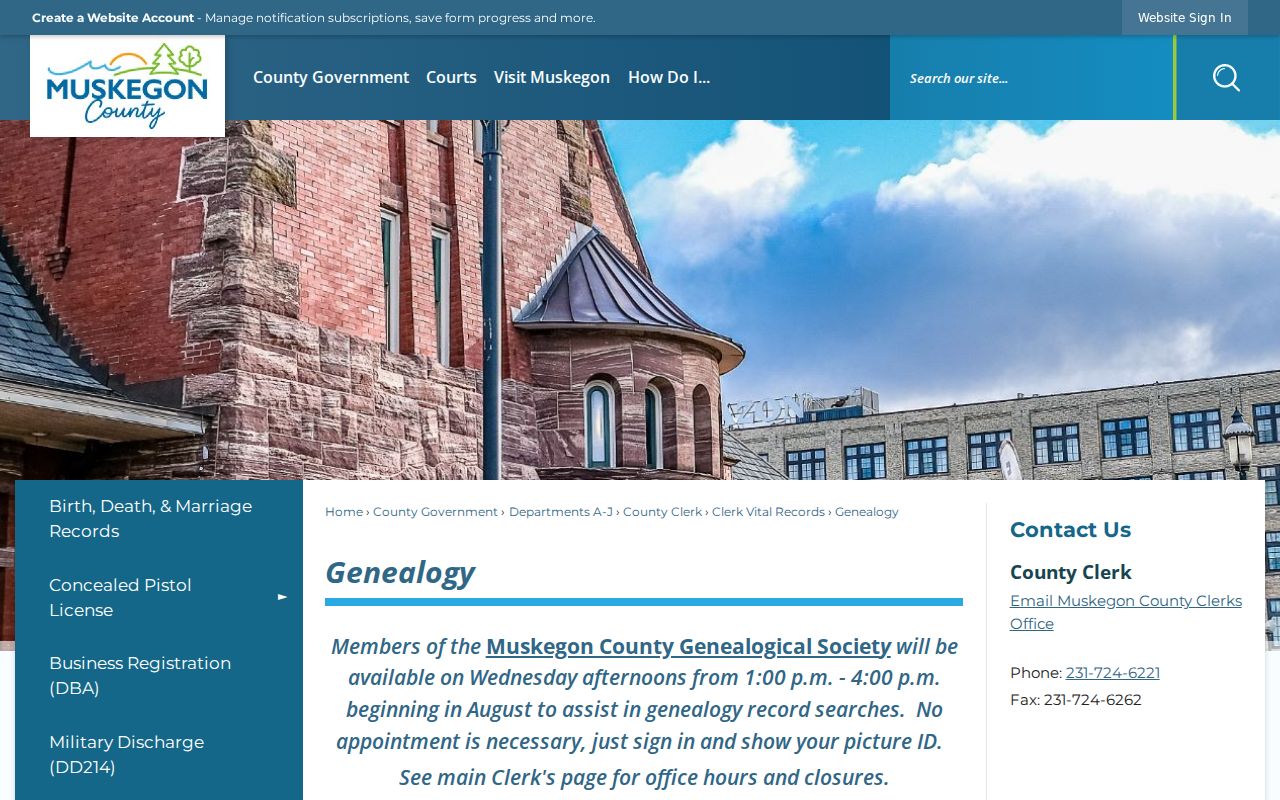
The County Clerk genealogy service is another dated route for local indexes and historical records.
For the full collection runs, reading an entry, and tracing consecutive directory years, use the Muskegon city directory collections. Keep the edition, page, alphabetical or address section, and source date with every transcription.
Muskegon Newspapers and Genealogy Shelves
Local research often works best when a directory line is tested against a newspaper or index. Hackley’s collection includes city directories, vital microfilm, deeds, the 1884 and 1894 county census microfilm, family histories, and surname cards. MADL holds Muskegon Chronicle microfilm from 1869 through 2018, NewsBank coverage from 1997 onward, and color page scans from September 2018 onward. Its obituary or article request asks for a deceased name, death date and place, requester details, and a delivery choice.
The Michigan vital-record copy route shows that state copies are a separate process from a local index.
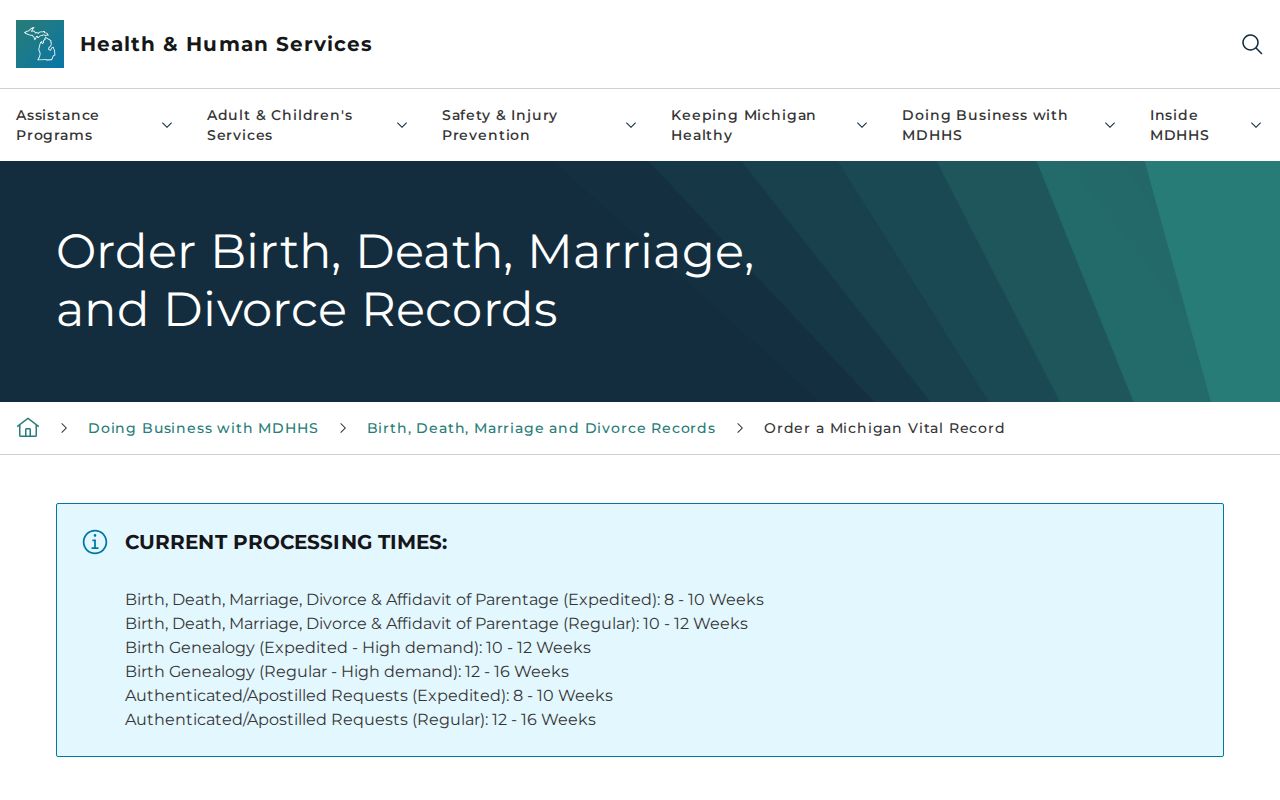
Birth access is restricted, while death, marriage, and divorce have different rules. Michigan’s genealogy transmission rule uses 75 years for death, marriage, and divorce, and 110 years for birth, subject to sealing and other restrictions. Ask for an index, genealogy copy, verification, or certified copy by its proper name.
Muskegon Records Request Routes
A missing portal result does not mean the record never existed. Muskegon County’s Freedom of Information Act route is for identifiable county public records and requires a focused description. The county says the normal response period is five business days, with a possible ten-business-day extension, under Michigan FOIA, MCL 15.231 et seq. Fees may apply for search, review, separation, copying, or mailing. Court and vital requests belong with their own clerks because FOIA does not override those confidentiality rules.
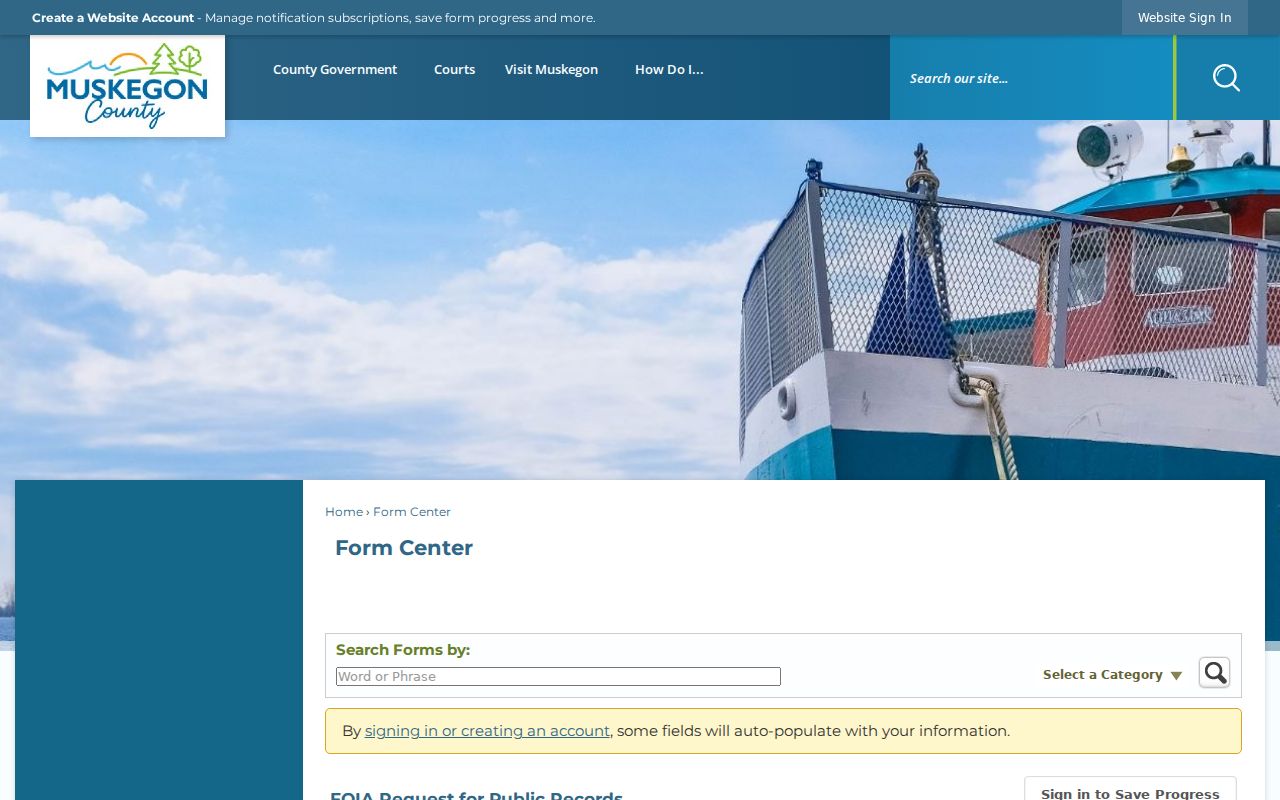
The Muskegon County FOIA web form asks for the department, requester, record description, request type, and delivery information.
For a building history, identify the street address, parcel number, permit type, and date range. For a deed, ask the Register of Deeds with names, legal description, document number, or recording date. The right office and a narrow request are more useful than a catchall demand.
Note: Save the submission date, custodian, response, fee estimate, and whether the answer was an index hit, copy, inspection, or no-record response.
Muskegon Search Terms That Change
Historical Muskegon research has a few local traps. The Muskegon County Genealogical Society identifies street-name changes from 1887 to 1889 and a city street-renumbering project in 1925. A directory entry can therefore preserve an address that does not match a current map. Muskegon may also refer to the city, county, township, a postal city, or a nearby municipality. County material assigns Muskegon City code 24, separate from nearby jurisdictions such as North Muskegon, Muskegon Heights, and Norton Shores.
- Parcel
- A land unit used to connect assessment, tax, GIS, plat, and deed information.
- Situs address
- The physical property address, which can differ from an owner’s mailing address.
- Grantor and grantee
- The recorded party transferring an interest and the party receiving it in an instrument.
- Index
- A finding tool that points to a record; it is not automatically the original image or a full file.
Preserve the original spelling, street wording, source year, municipality, and the modern candidate separately. The county GIS and USPS answer different questions: one maps jurisdictional parcel geography, while the other normalizes a current mailing address.
Muskegon Name Search Limits
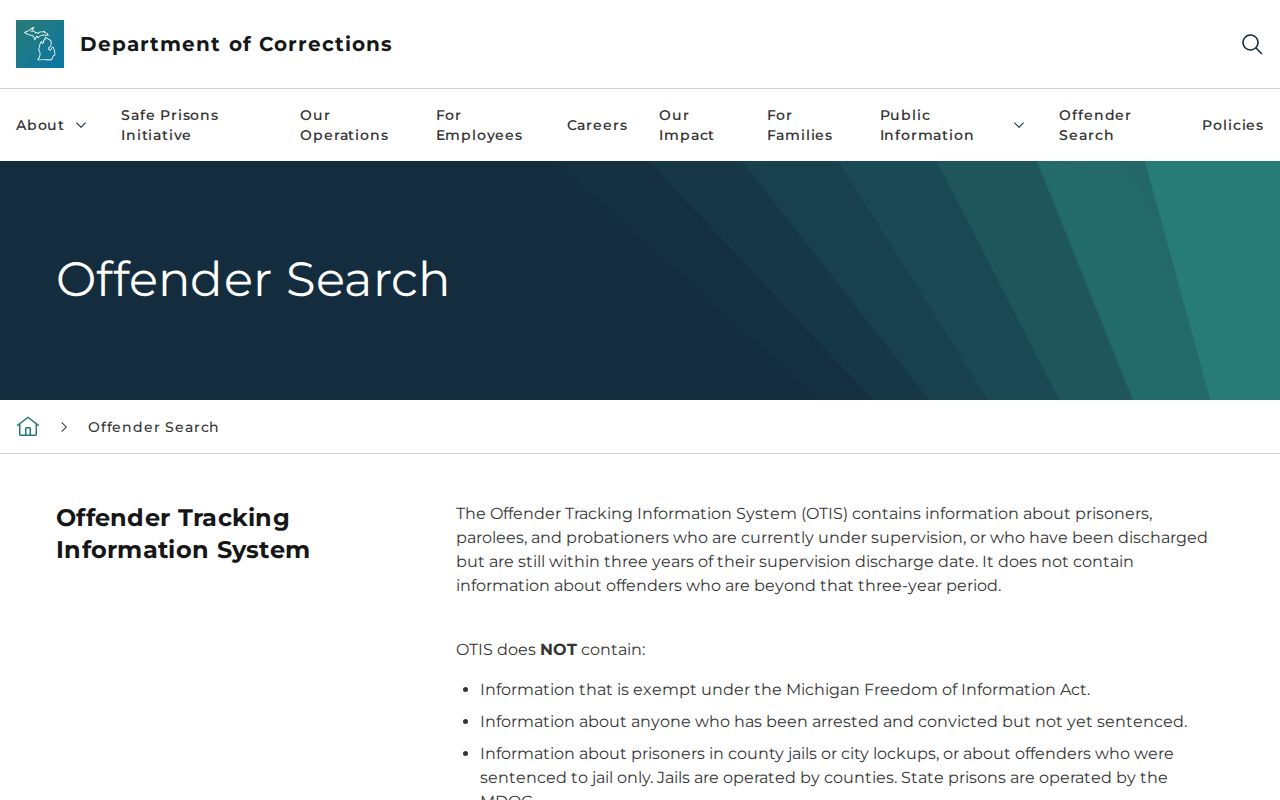
State and county name-search tools have distinct scopes. MiCOURT is public case metadata, not a complete court file, and protected or sealed categories do not appear in ordinary public results. Michigan Department of Corrections OTIS covers specified state custody, parole, probation, and recent discharge categories, not ordinary county-jail custody. State license and business systems can tie a name to an administrative record, but an office or registration address is not a home address.
The Michigan OTIS search illustrates the state-custody route.
Use a result only for the question the custodian designed it to answer. A docket event, an inmate locator entry, a license, or a business filing can provide a date-specific lead. It does not establish a current household connection without an independent, dated source.
Muskegon Future Deed Alerts
Muskegon County Property Fraud Guard is a narrow, forward-looking service. A person registers a name, and the system alerts that person after a future recorded document includes it. It does not search old deeds, settle a title question, or prove fraud. For an historical Muskegon residents directory search, use the recorder index and the instrument trail instead. The alert is a useful consumer-safety layer after a property connection is already known.
Registration should be based on the Property Fraud Guard signup route and its current instructions. The recorder still cannot give legal advice or interpret a document. A recorded name alert should prompt careful review of the document number, property description, and recorded parties.
Keep the alert date apart from the recording date. It reports a later system notice about a future filing, while the recorder index and document itself supply the recorded instrument’s date and parties.
Muskegon Evidence Logs Matter
A small source log makes conflicting Muskegon records easier to sort. For each result, retain the search date, source, query, person or parcel name as printed, record date, municipality, page or document number, and a short confidence note. Mark a claim direct when a source identifies the person, address, and date together. Mark it indexed when only a catalog or index hit is visible. Mark it context when a map, neighborhood page, or local history source explains the setting without naming the household.
The date should also choose the next shelf. Muskegon County was organized in 1859 and the City of Muskegon was incorporated in 1869, so an early county land, tax, court, or naturalization record is not interchangeable with a city directory. The county guide points to federal census coverage from 1870 and Michigan state-census material for 1884 and 1894. Later trails can pair Polk directories, newspapers, tax material, and recorded instruments. For a pre-digital deed image, the county index may lead to an office, Hackley, or Archives request rather than an online download. Naming the exact series and time span makes that handoff clear.
This is especially useful when a historic address collides with the 1887 to 1889 street changes or the 1925 renumbering. It also prevents a countywide record from being silently recast as a City of Muskegon record. The most reliable Muskegon residents directory result is usually two independent, dated sources that agree on the same person, place, and time.
Note: Treat a portal’s no-result response as evidence about that search, not proof that no record exists in another Muskegon collection.